EPR · System Operator (Re-use system)
What is System Operator (Re-use system)?
The definition and legal duties of the entity managing a reusable packaging network under the PPWR.
A system operator is the individual or business responsible for managing a packaging re-use network. Under the Packaging and Packaging Waste Regulation, they control how reusable packaging circulates, ensure the system functions correctly, and track the data required for compliance.
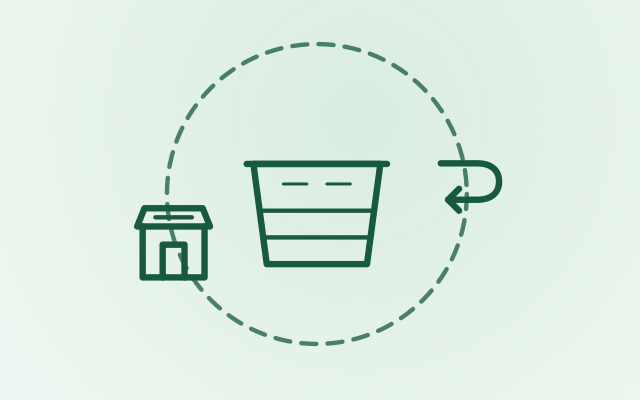
The transition toward a circular economy places a heavy focus on packaging that can be used multiple times before it becomes waste. But for reusable packaging to actually be reused safely and efficiently, it requires physical and digital infrastructure. This infrastructure is what the European Union calls a re-use system. Within these systems, whether they handle heavy pallets for industrial transport or consumer-facing coffee cups, there must be a central coordinator. This coordinator is the system operator.
For brands and merchants selling goods into the European Union, the introduction of the Packaging and Packaging Waste Regulation brings strict new targets for reusable packaging. When you opt to use reusable packaging to meet these legal targets, you usually have to participate in a structured re-use system. Understanding the role of the system operator helps you figure out who handles the complex logistics of collection, who reports the compliance data, and who actually owns the physical packaging. In many cases, the system operator takes on the heaviest administrative and logistical burdens, allowing you to focus on simply selling your products.
What a system operator actually means
According to the legislation (Annex VI), a system operator is any natural or legal person who participates in a re-use system and manages it (Packaging and Packaging Waste Regulation (EU) 2025/40). They act as the governing body of the network.
The system operator is the central nervous system of a re-use network, turning isolated reusable containers into a measurable, compliant, and functional loop.
In practical terms, the operator sets the rules for how the packaging is used, collected, cleaned, and redistributed. If a local cafe network shares standard reusable cups, the company providing the cups, washing them, and tracking their movement is the system operator.
Under the rules, closed loop systems involve reusable packaging circulated by a system operator or a cooperating group of participants without the packaging changing ownership. The system operator ensures that the collection, reconditioning, and redistribution of the packaging actually happens and is generally available. They are also explicitly tasked with verifying that re-use is properly enabled and controlling the proper functioning of the entire system.
Does this apply to me?
If you manufacture or sell packaged goods in Europe, this concept applies to you whenever you use reusable packaging to meet the upcoming sustainability targets. You will likely interact with a system operator regularly, or in some specific strategic scenarios, you might choose to become one yourself.
Most merchants will operate simply as system participants. This means you use the packaging provided by the system operator to ship or sell your goods. You pay a fee for the service, and in return, the operator takes care of the governance structure, data reporting, and ensuring the packaging completes its required trips and rotations. For a merchant trying to meet reuse quotas without building a massive logistics network from scratch, partnering with a competent system operator is the most practical path forward.
However, if you decide to create your own proprietary network of returnable containers exclusively for your specific brand, you become the system operator. This means you must take on the responsibilities of setting up reverse logistics, ensuring the packaging is reconditioned properly without creating health and safety risks, and reporting the exact number of fillings, re-uses, and rejects to the authorities. Building a system requires significant capital expenditure and a high density of collection points, making it a major operational commitment.
What must a re-use system operator control, verify and report?
The core responsibilities in the regulations are exacting: a system operator must ensure its network actually delivers environmental benefits rather than simply creating more plastic waste. The operator must keep detailed records and guarantee fair access for participants.
| Description |
|---|
| Operator must control the system's proper functioning and verify re-use is enabled. |
| Operator provides competent authorities with reliable data to fulfil reporting obligations. |
| In a closed loop, the packaging circulates without a change of ownership. |
| Open loop systems without an operator are exempt from certain governance and reporting rules. |
| Deposit and return system operators must be independent, non-profit legal entities. |
| DRS operators must use a sufficient amount of annual turnover for public awareness campaigns. |
Beyond these operational rules, there are implications for packaging design and labelling. When reusable packaging is designed following the specific requirements of a re-use system operator and carries their trademark, the re-use system operator is legally considered the manufacturer of that packaging (Commission Notice - Guidance document for Regulation (EU) 2025/40 on packaging). This is particularly common in closed loop re-use systems.
There are also specific exemptions built into the law. If an open loop system does not have a system operator, it is exempt from the requirement to bear a QR code or digital data carrier for tracking purposes. Open loop systems without a system operator are also exempt from several administrative requirements, such as having reporting rules for collection rates and ensuring a fair distribution of costs and benefits.
Common misconceptions about system operators
- System operators are the same as Producer Responsibility Organisations. A producer responsibility organisation manages the financial and operational end-of-life recycling obligations for single-use and other packaging. A system operator manages a live, active network of reusable packaging that is still in its useful life cycle.
- Every re-use system requires a single operator. Open loop systems can function without a single defined system operator. In these open loops, ownership of the packaging changes hands, and participants decide individually whether to reuse the packaging or pass it on to another participant.
- System operators only deal with consumer packaging. While consumer-facing systems get the most public attention, system operators are heavily involved in business-to-business transport packaging, such as shared pallet networks, reusable crates, and bulk containers.
- The system operator always owns the packaging. While this is true in a closed loop system where the operator or cooperating group retains ownership, in other setups, ownership might change hands depending on the contractual agreements within the governance guidelines.
5 examples of re-use system models
- Deposit and return systems: A highly regulated system for beverage containers where consumers pay a deposit at purchase. The system operator here must be an independent, non-profit entity and coordinates the massive return network of bottles and cans across a whole country.
- Business pallet pooling: A classic closed loop. The system operator owns millions of wooden or plastic pallets and leases them to manufacturers. They collect, repair, and redistribute the pallets across international supply chains.
- Reusable e-commerce mailers: A company provides durable mailing bags to online retailers. Consumers return the empty bags via public post boxes. The providing company acts as the system operator tracking the rotations and cleaning the bags before sending them back to the retailers.
- City coffee cup networks: A local business acts as the system operator, supplying standardised reusable cups to dozens of independent cafes in a single city. They manage the industrial washing facilities and the digital tracking application used by consumers.
- Standardised food crates: An operator provides standardised plastic crates to farmers to transport fresh produce to supermarkets. The supermarket returns the empty crates to the operator's washing facility, ensuring the crates are safe for food contact before the next rotation.
Terms related to system operator
| Term | Relationship |
|---|---|
| Closed Loop Re-use System | A system where the operator circulates packaging without transferring ownership. |
| Open Loop Re-use System | A system where ownership transfers, which can sometimes operate without a central system operator. |
| Reusable Packaging | The physical items that the system operator manages, tracks, and cleans. |
| Deposit and Return System / DRS (EPR) | A specific type of system managed by an independent, non-profit system operator. |
| PPWR Article 11 | The regulation defining the strict design and safety criteria for the packaging managed by the operator. |
Frequently asked questions
What is the difference between an open loop and a closed loop system?
In a closed loop system, the reusable packaging circulates without a change in ownership, usually managed closely by the system operator. In an open loop system, the packaging circulates among an unspecified number of participants, and ownership of the packaging changes at one or more points in the process.
Do system operators have to report data to the government?
Yes. Under the new regulations, system operators must provide competent authorities with the accurate and reliable data needed to fulfil reporting obligations. This includes tracking rules allowing access to data on the number of fillings, collection rates, and units added to the system.
Who is considered the manufacturer if a system operator designs the packaging?
When reusable packaging is designed to the specific requirements of a re-use system operator and carries their trademark, the system operator is legally considered the manufacturer.
Are system operators responsible for cleaning the packaging?
The system operator is responsible for ensuring that the system has rules and processes in place for reconditioning, which includes cleaning and washing. They do not always have to execute the washing themselves, but they must guarantee the system meets health, safety, and hygiene requirements.
Does a deposit and return system have an operator?
Yes. A deposit and return system must have a single system operator, or if there are multiple, the Member State must adopt measures to ensure coordination between them. This operator must be a non-profit and independent legal entity.
What happens if an open loop system has no operator?
Open loop systems without a system operator are exempt from certain requirements, such as having a system operator to control functioning, specific reporting rules, and ensuring a fair distribution of costs and benefits. They are also exempt from bearing a QR code or digital data carrier for tracking.
Sources:
Written by Daniel Vaknine, Co-founder – Compliance & Operations · Last reviewed 28 Jul 2026
Not sure what applies to you?
Answer a few questions about where you sell and see which packaging rules you fall under.
Check your obligations