Protective packaging for online orders: the buyer's guide
Compare void fill, cushioning, mailers and inserts through a practical EPR and PPWR lens.
The best protective packaging for shipping is the smallest, lightest system that prevents damage while remaining compatible with the recycling route for its material. From the later of 1 January 2030 or the PPWR implementation timetable, e-commerce packaging must meet a maximum 50% empty-space ratio, so oversized boxes and excess filler become a compliance issue too.
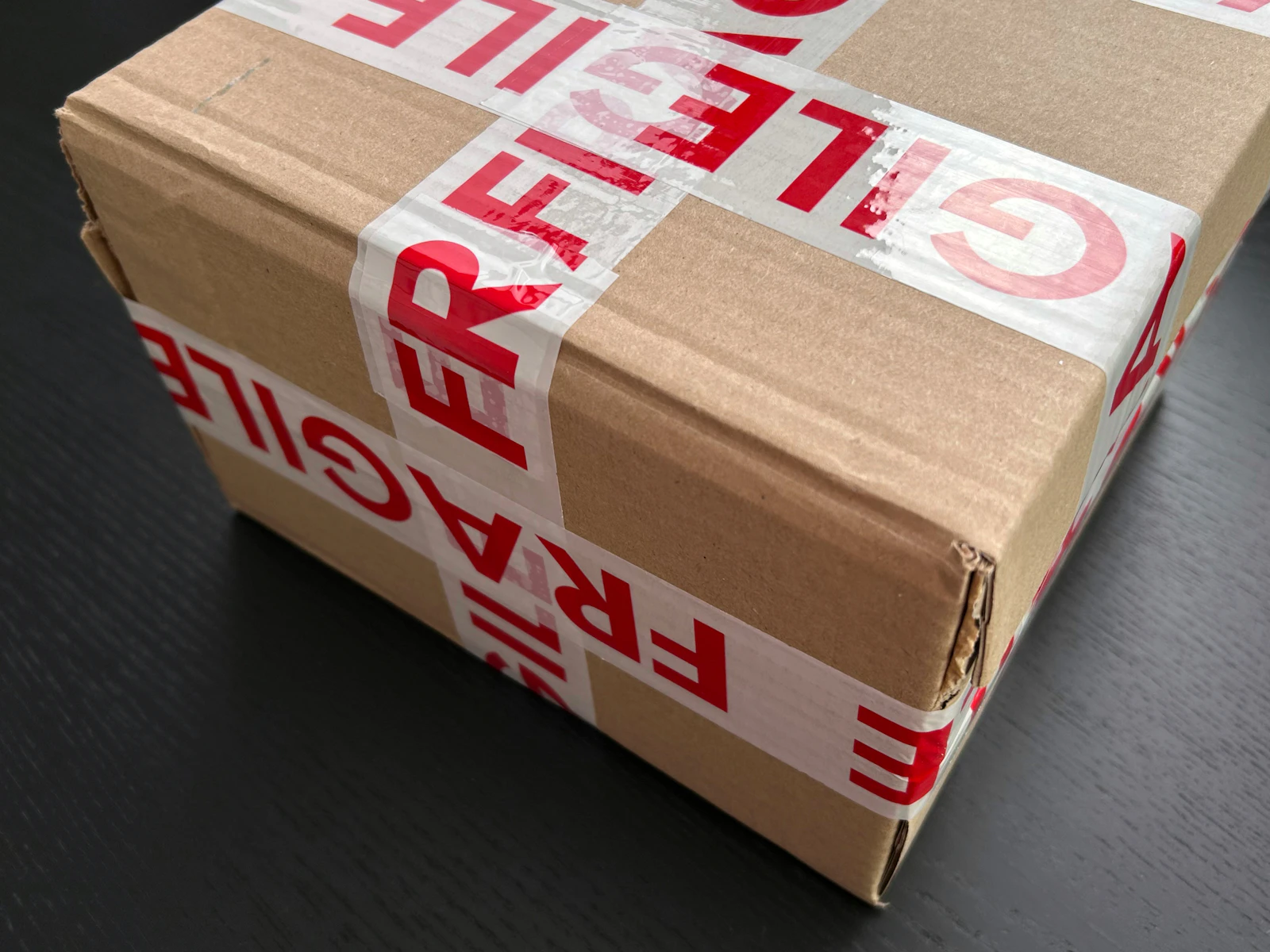
Which protective packaging for shipping should you choose?
Start with the product, not the filler. Protective packaging should provide only the functions the shipment actually needs, such as impact protection, abrasion protection, immobilisation or weather resistance. PPWR Article 10 requires packaging weight and volume to be reduced to the minimum needed to maintain its functionality, including product protection.
For most online orders, the practical choices fall into four groups: void fill, cushioning, mailers and fitted protection such as corrugated inserts or corner protectors. The best format depends on what can realistically damage the product in transit.
| Protective option | Best suited to | Main design question | Recycling consideration | Typical cost driver |
|---|---|---|---|---|
| Paper void fill | Filling irregular gaps and light immobilisation | Can a smaller box remove the need for filler first? | Fibre-based packaging should be designed so coatings, laminates and other components do not hinder paper recycling, according to Cepi paper-packaging recyclability guidance | Paper weight and dispensing method |
| PE air pillows | Lightweight gap filling | Is the product sufficiently robust for air-based immobilisation? | RecyClass lists LDPE, LLDPE and HDPE as fully compatible main-body materials in its 2026 natural PE film guideline, subject to the complete pack design | Film use and inflation equipment |
| Corrugated inserts | Holding products in a fixed position | Can the insert replace loose fill and reduce box size? | Fibre design should avoid combinations that obstruct the paper recycling process, under Cepi recyclability recommendations | Board use, conversion and assembly |
| Bubble wrap or foam cushioning | Fragile surfaces and impact-sensitive goods | Is this protection genuinely needed, and can it be reduced or replaced? | Plastic recyclability depends on polymer, additives, labels and other components, not the generic word “plastic” | Material quantity and labour |
| Mailer with built-in protection | Soft goods or products that do not need a box | Can one pack perform both shipping and protection functions? | A simpler mono-material design can make assessment easier, but the actual recycling route still matters | Mailer specification and product fit |
The table is a selection framework, not a universal ranking. Local collection and sorting systems differ, and even packaging made from the same base material can perform differently in recycling because of coatings, labels, adhesives, inks or mixed-material components.
When should you use void fill?
Use void fill only when the shipment needs gap filling after the outer pack has already been right-sized. If a smaller box can hold the product securely, reducing the box is usually the cleaner first move because PPWR counts the volume occupied by filler as empty space.
PPWR Article 24 explicitly names paper cuttings, air cushions, bubble wrap, sponge fillers, foam fillers, wood wool, polystyrene and Styrofoam chips as filling materials that count as empty space. This is why the legal question is not simply whether the filler is recyclable.
For a deeper explanation of the category itself, see what void fill is.
Under PPWR, space occupied by filler still counts as empty space, including paper cuttings, air cushions, bubble wrap and polystyrene chips. Regulation (EU) 2025/40, Article 24
When is cushioning better than loose fill?
Cushioning is useful protective packaging when the product needs protection from impact, vibration or surface damage rather than merely being stopped from moving around a box. The most efficient design places protection where the product is vulnerable instead of filling every available gap.
A fragile ceramic item, for example, may need a fitted insert plus limited local cushioning. A textile product may need neither. PPWR's minimisation requirement preserves product-protection functionality, so the objective is not to remove necessary protection, but to avoid material and volume that serve no protective purpose.
When should you use a mailer instead of a box?
A mailer is an attractive protective packaging choice when the product itself is not crush-sensitive and does not need rigid structural protection. Clothing, soft accessories and some durable flat goods can often be shipped without a box, provided the chosen format still protects the product through the intended distribution chain.
Using one appropriately sized shipping pack can also remove the box-plus-filler combination. That reduces the number of packaging components to classify for EPR and can make the packaging specification easier to maintain.
Are corrugated inserts better than loose filler?
Corrugated inserts are especially useful when the product has a predictable geometry and needs to remain in a fixed position. A fitted insert can provide structure at specific contact points instead of filling the remaining volume indiscriminately.
Fibre-based protective packaging does not automatically mean fully recyclable in every design. Cepi notes that coatings, laminates and combinations with other materials can make paper packaging more challenging for recycling, so the complete construction still needs assessment against the destination market's system.
How does protective packaging affect EPR fees?
Protective packaging affects EPR fees mainly through what you place on the market: its material, weight, category and any national eco-modulation rules. Using less unnecessary packaging can therefore reduce the kilograms that ultimately feed into weight-based fee calculations, where the national scheme charges by material weight.
The exact formula is market-specific. How EPR fees are calculated explains why two superficially similar protective formats can produce different declared quantities or rates.
PPWR adds another reason to improve packaging design. Article 6 establishes EU recyclability performance grades A, B and C from 2030, while detailed design-for-recycling criteria are to be set through the Regulation's delegated framework. A specific product should therefore not be assigned a legal PPWR grade today simply from labels such as “paper”, “PE” or “polystyrene”. See PPWR recyclability grades A, B and C for the legal grading framework.
What is the PPWR empty-space rule for online orders?
The PPWR sets a 50% maximum empty-space ratio for grouped, transport and e-commerce packaging from the later of 1 January 2030 or three years after the relevant implementing acts enter into force. The Commission must establish the calculation methodology by 12 February 2028 under Article 24 of Regulation (EU) 2025/40.
For e-commerce packaging, empty space is the difference between the total packaging volume and the volume of the sales packaging inside it. Crucially, filler does not make that empty space disappear for the calculation.
The filler rule makes box selection a compliance variable. The practical sequence is to choose the smallest protective outer format that works, immobilise the product efficiently, then add only the cushioning that testing or experience shows is necessary. The full calculation is explained in the PPWR empty-space rule.
How do you choose protective packaging by product type?
For soft, non-fragile goods, first test whether a right-sized mailer can replace a box. Avoid adding cushioning simply because it is standard in the packing station.
For small rigid products, first reduce the box around the product. If movement remains a risk, use a fitted insert or limited void fill targeted at that movement.
For fragile products, prioritise damage prevention. Use fitted protection around vulnerable edges or surfaces and validate the pack for the distribution environment. PPWR minimisation expressly recognises product protection as a packaging function.
For heavy products, focus on structural restraint rather than large volumes of lightweight loose fill. An insert, corner protection or other fitted solution may control movement more directly.
For irregular products, some void fill may be unavoidable. The design goal is still to reduce the outer volume and filler to what protection actually requires.
A practical buying checklist
Before approving a protective packaging format, record the product dimensions and fragility, outer-pack dimensions, every packaging component, material and weight, and the reason each protective element is present. Then ask whether a smaller format or fewer components can deliver the same protection.
For plastic protective packaging films, check the complete construction rather than the polymer name alone. RecyClass's March 2026 PE guidance shows why: PE main-body materials can be fully compatible with the PE film stream, while certain non-PE layers, metallisation and other features can move the design into limited or non-compatible categories under its methodology.
For paper and board, apply the same whole-pack logic. Cepi's guidance recommends designing combinations of paper with other materials so they do not hamper the recycling process, and also advises checking national EPR protocols because collection and assessment differ by market.
Finally, keep the packaging specification connected to actual sales. Gramta turns sales data plus packaging specifications into kilograms by material and market for EPR reporting, while its compliance guidance layer helps businesses work through registration, scheme and reporting requirements across markets such as Sweden, Germany, France, Italy, Spain and Poland. Gramta EPR reporting software can keep those packaging decisions connected to the numbers that must later be reported.
Sources:
Frequently asked questions
- What is the best protective packaging for shipping online orders?
- The best option is the lightest, simplest packaging that protects the product reliably and works with the relevant recycling stream. Under [PPWR Article 10 packaging minimisation rules](https://eur-lex.europa.eu/eli/reg/2025/40/oj), packaging weight and volume must be reduced to the minimum needed for functionality, including product protection.
- Does void fill count as empty space under PPWR?
- Yes. [PPWR Article 24 explicitly treats filling materials](https://eur-lex.europa.eu/eli/reg/2025/40/oj), including paper cuttings, air cushions, bubble wrap, foam and polystyrene chips, as empty space when calculating the ratio.
- What is the PPWR empty-space limit for e-commerce packaging?
- The maximum empty-space ratio is 50% from the later of 1 January 2030 or three years after the relevant implementing acts enter into force, under [Regulation (EU) 2025/40 Article 24](https://eur-lex.europa.eu/eli/reg/2025/40/oj). The Commission must adopt the calculation methodology by 12 February 2028.
- Does recyclable protective packaging always mean lower EPR fees?
- Not automatically. EPR fees depend on the national scheme, declared material and weight, and any applicable fee modulation. PPWR will also link EPR fee modulation to recyclability performance grades under [Article 6 and Article 45](https://eur-lex.europa.eu/eli/reg/2025/40/oj), but the detailed EU design-for-recycling criteria are still being established.
Reviewed by Anton Kröger