The best void fill for e-commerce, and the PPWR empty-space rule it must meet
Paper, air pillows, corrugated inserts and loose-fill options compared through a practical EPR and PPWR lens.
The best void fill is the least material that reliably protects the product after the shipping box has already been right-sized. Under PPWR, filler does not reduce measured empty space: Article 24 counts paper cuttings, air cushions, bubble wrap, foam and polystyrene chips as empty space, with a future maximum ratio of 50% for e-commerce packaging.
What is the best void fill for e-commerce?
There is no single best void fill for every shipment. The right choice is the smallest amount of material that prevents the actual damage risk, fits the recycling route for the destination market and does not compensate for an unnecessarily large outer box.
For many e-commerce operations, the useful shortlist is paper cushioning, PE air pillows, corrugated inserts and loose-fill materials. They solve different problems. Paper and air pillows fill gaps, while fitted corrugated inserts can restrain a product without filling the entire surrounding volume.
If the category itself is unfamiliar, start with what void fill is. The more important procurement question is then whether the shipment needs loose fill at all.
| Option | Best use | Main recyclability point | PPWR empty-space treatment | Main buying consideration |
|---|---|---|---|---|
| Paper cushioning | Irregular gaps, surface protection and light immobilisation | Fibre-based designs should avoid coatings, laminates and components that hinder paper recycling, according to Cepi recyclability guidance | Counts as empty space | Paper weight, dispensing method and box fit |
| PE air pillows | Lightweight gap filling | RecyClass lists LDPE, LLDPE and HDPE as compatible main-body materials in its 2026 PE flexible-film guideline, subject to the full design | Counts as empty space | Film specification, inflation equipment and local film collection |
| Corrugated insert | Predictable product shapes needing restraint | A fitted fibre component can be assessed within the paper or board recycling route when its full construction is compatible | Its occupied space does not turn an oversized e-commerce pack into filled product volume | Fit, board weight, conversion and assembly |
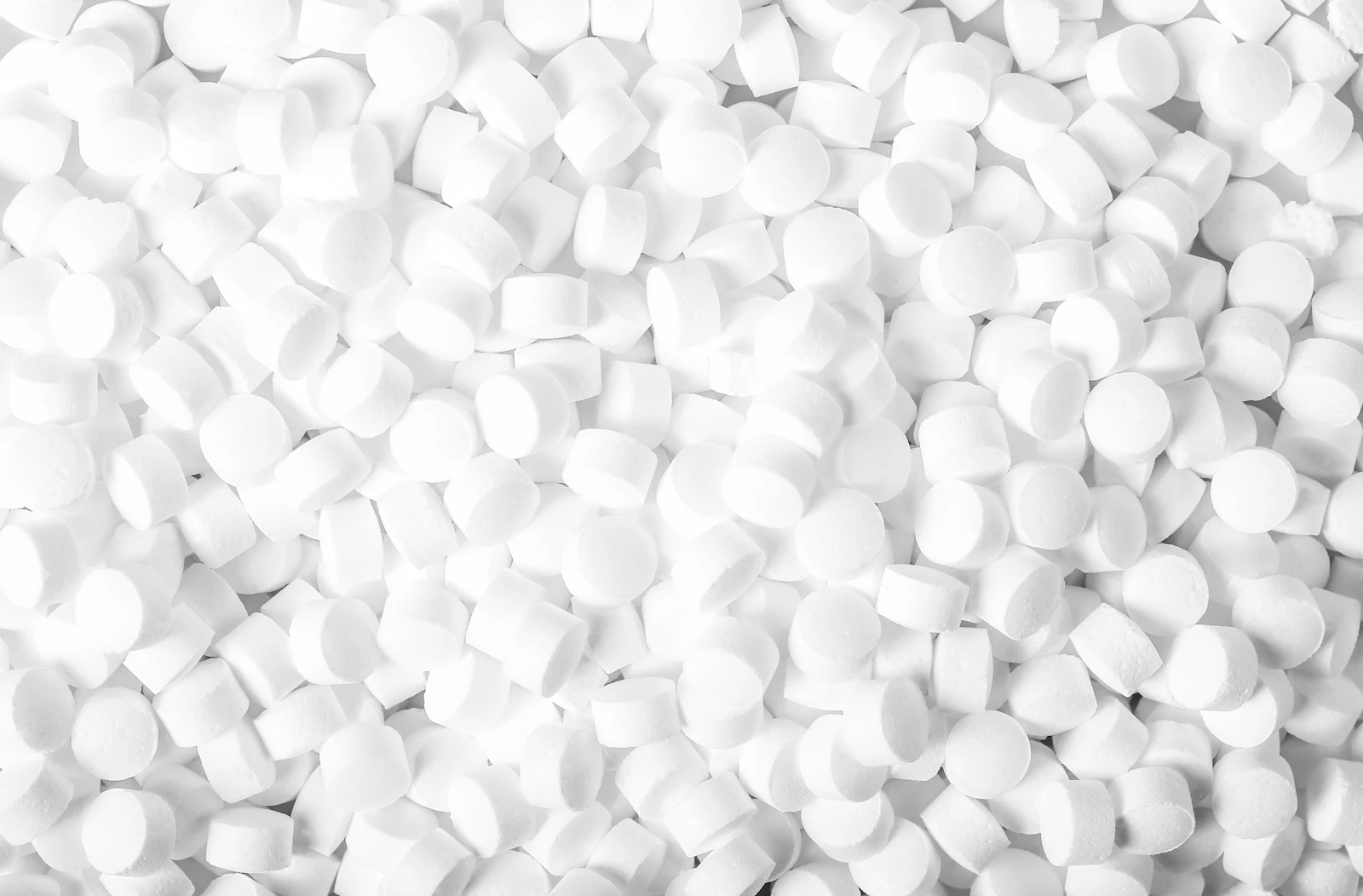
| Loose-fill chips | Irregular shapes and some cushioning applications | Composition varies widely, so the exact material and destination recovery route must be checked | Polystyrene and Styrofoam chips explicitly count as empty space | Material specification, containment and recovery route |
The table is deliberately not a universal “greenest to worst” ranking. Collection and sorting infrastructure differs by country, and recyclability depends on the complete packaging design rather than the marketing name of the filler.
Why should you right-size the box before choosing void fill?
Because PPWR treats filler as empty space. Adding more paper, air pillows or foam can stop the product moving, but it does not improve the empty-space ratio used for the legal calculation.
Regulation (EU) 2025/40 Article 24 defines empty space as the difference between the total volume of the e-commerce, transport or grouped packaging and the volume of the sales packaging contained inside. It then expressly states that space filled by common filling materials remains empty space.
Under PPWR, the compliance sequence is box first, protection second: filler cannot turn unnecessary shipping volume into compliant product volume.
The empty-space rule makes outer-pack dimensions a more fundamental decision than filler type. A right-sized box can reduce material in the box itself and reduce the quantity of void fill needed at the same time.
What is the PPWR 50% empty-space rule?
The PPWR requires economic operators filling grouped, transport or e-commerce packaging to keep the maximum empty-space ratio at 50%. The deadline is the later of 1 January 2030 or three years after the relevant implementing acts enter into force.
The Commission must adopt the calculation methodology by 12 February 2028. Article 24 says that methodology must account for situations where additional space is needed to meet legal requirements or protect products, including irregular shapes, multiple sales packs, liquids and easily damaged goods.
The methodology's carve-outs mean the 50% rule is real, but the Regulation also recognises that protection can require space. The practical calculation and timing are explained in the PPWR empty-space ratio guide.
Does paper void fill count as empty space?
Yes. Paper cuttings are explicitly listed as filling material that counts as empty space under Article 24. A switch from plastic air pillows to paper therefore does not improve the legal empty-space ratio if the outer packaging dimensions stay the same.
Paper can still be a sensible protective material for other reasons. Cepi's European paper-packaging guidance explains that paper-based packaging can be designed for effective recycling, while coatings, laminates and combinations with other materials may make the recycling process more difficult.
The decision should therefore separate two questions: how much space the shipping pack uses, and how compatible the chosen protective material is with its recycling route.
Are air pillows a good void-fill option?
PE air pillows can be material-efficient for gap filling because most of their internal volume is air, but they still count as empty space under PPWR. They should therefore be used after box dimensions have been reduced as far as product protection allows.
For a PE-film design, recyclability depends on the complete specification. RecyClass's March 2026 natural PE flexible-film guideline treats LDPE, LLDPE and HDPE as fully compatible main-body polymers, while certain non-PE layers, metallisation, additives, labels and other components can reduce or disqualify compatibility under its methodology.
Local collection remains a separate question. A technically compatible film is not automatically collected through every household system in Europe.
Are corrugated inserts better than loose void fill?
Corrugated inserts can be better when the product has predictable dimensions and needs to be held in place. A fitted insert can concentrate protection at corners, edges or contact points instead of filling a large cavity around the product.
An insert does not escape the broader PPWR minimisation requirement. Article 10 of Regulation (EU) 2025/40 requires packaging weight and volume to be reduced to the minimum necessary for functionality, including protection.
The complete fibre design still matters for recycling. Cepi advises designers to ensure combinations with coatings or non-paper materials do not hamper the paper recycling process.
Are biodegradable or compostable packing peanuts a good void fill?
Do not assume “biofill” has one compliance outcome. Loose-fill products can have different material compositions and end-of-life routes, so their EPR classification and recycling or composting claim must be based on the actual product specification and the destination system.
PPWR also treats biodegradable plastics as their own packaging category in Annex II. That means a biodegradable plastic filler should not be assigned the same future recyclability grade as paper, PE film or another plastic merely because it is marketed as compostable.
For purchasing, ask for the declared material, component weight, applicable standard or certification behind any compostability claim, and the disposal route available in the markets where the packaging will become waste.
Which void fill gets the best PPWR recyclability grade?
None can be assigned a universal legal grade today. PPWR Article 6 and Annex II establish performance grades A, B and C from 2030, but the assessment applies design-for-recycling criteria to individual packaging categories and units.
Grade A corresponds to at least 95% recyclability by weight under the future assessment, grade B at least 80% and grade C at least 70%. Packaging below 70% is technically non-recyclable under the PPWR framework, and from 2038 grade C packaging may no longer be placed on the market.
The grade thresholds do not make “paper = A” or “film = C”. The complete design and adopted criteria determine the result. Recyclability grades A, B and C explains the legal framework in more detail.
How does void fill affect EPR fees?
Void fill becomes additional packaging material placed on the market. Where a national EPR system charges contributions based on material weight, every additional gram of paper, plastic or another declared packaging material can increase the quantity on which the contribution is calculated.
Some countries and schemes also apply eco-modulation according to packaging characteristics. That means the material choice, design and recyclability can affect the effective contribution as well as the reported weight. Eco-modulation explained covers this mechanism.
PPWR will increasingly connect recyclability performance with EPR fee modulation. The exact fee impact still remains country- and scheme-specific, so there is no honest universal claim that one void-fill material is always cheapest for EPR.
How do you choose void fill by product type?
For soft and non-fragile products, first ask whether a mailer or smaller outer pack can eliminate void fill entirely.
For small rigid products, reduce the box around the product and use only enough filler or restraint to prevent meaningful movement.
For fragile products, prioritise protection at vulnerable points. A fitted corrugated structure plus limited cushioning may use space more efficiently than filling the whole box.
For heavy products, use structural restraint rather than relying on large volumes of lightweight loose fill to stop movement.
For irregular products, some loose fill may remain practical. Record why the additional space and material are needed so the packaging design can be retested when products, boxes or fulfilment methods change.
What should e-commerce teams measure now?
Measure the product or sales-pack dimensions, outer shipping-pack dimensions, every protective component and the weight and material of each component. Those data support both PPWR right-sizing work and EPR packaging declarations.
Then test whether the box can become smaller without increasing damage. If not, test whether fitted protection can replace loose volume. Only after those steps should the team compare paper, PE film, foam or another filler by recyclability and cost.
The resulting specification should stay linked to real sales volumes. Gramta combines CSV sales uploads with packaging specifications to calculate kilograms by material, market and household or business stream for EPR reporting, while its compliance guidance supports registration and reporting requirements across markets such as Sweden, Germany, France, Italy, Spain and Poland. Gramta EPR reporting platform connects right-sizing decisions to the packaging data businesses later report.
Sources:
Frequently asked questions
- What is the best void fill for e-commerce?
- The best void fill is the minimum material needed after the shipping pack has been right-sized. For many products, fitted corrugated protection or limited paper or PE cushioning can work, but the correct option depends on fragility, package geometry and the destination recycling system.
- What is the PPWR empty-space limit for e-commerce packaging?
- [PPWR Article 24 sets a 50% maximum](https://eur-lex.europa.eu/eli/reg/2025/40/oj) empty-space ratio for e-commerce, grouped and transport packaging from the later of 1 January 2030 or three years after the relevant implementing acts enter into force.
- Does void fill count as empty space under PPWR?
- Yes. The PPWR specifically counts space occupied by paper cuttings, air cushions, bubble wrap, sponge and foam fillers, wood wool, polystyrene and Styrofoam chips as [empty space for the calculation](https://eur-lex.europa.eu/eli/reg/2025/40/oj).
- Which void fill gets the best PPWR recyclability grade?
- No void-fill material has an automatic legal PPWR grade today. From 2030, grades A, B and C will be assessed for the complete packaging unit using [EU design-for-recycling criteria](https://eur-lex.europa.eu/eli/reg/2025/40/oj), so material composition and design must be checked rather than assuming paper is A or plastic is C.
Reviewed by Anton Kröger